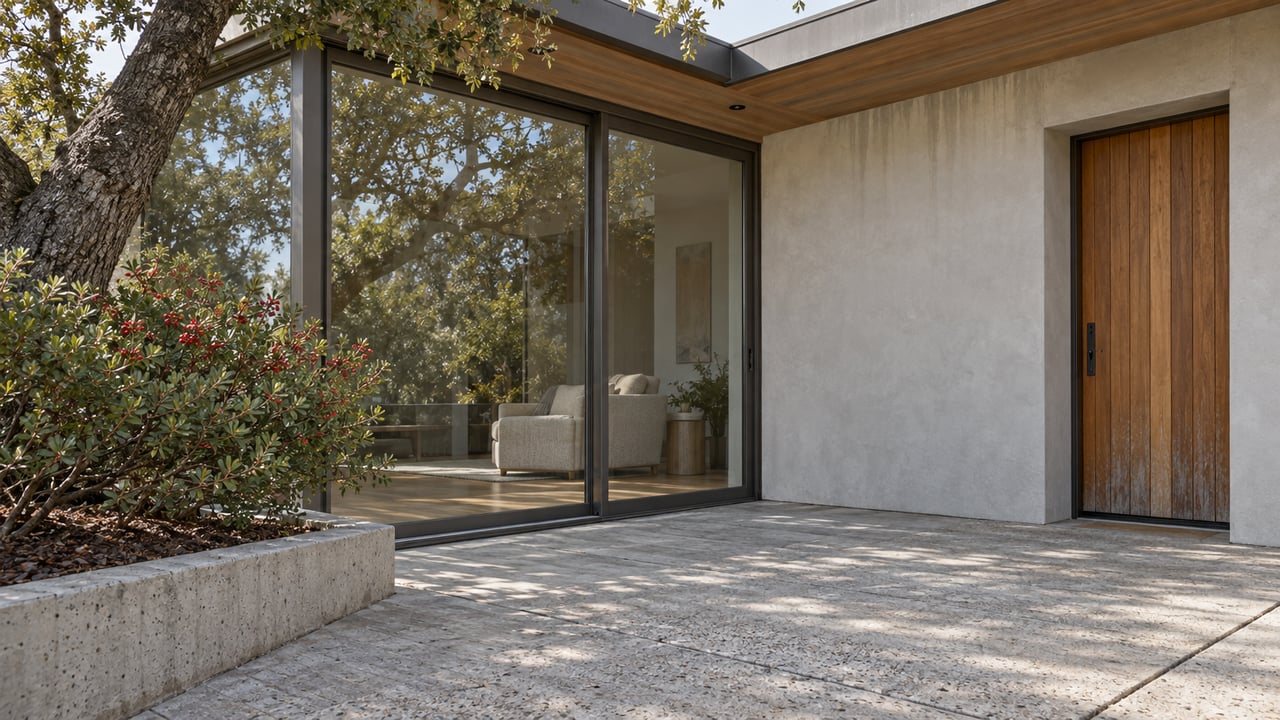
About 15 years ago, by the Chronicle's account, Heath Ceramics co-owner Robin Petravic asked the City of Sausalito about replacing a sharply pitched roof on an old building on the company's Marinship property. The pitched roof kept forklifts out. The owners were told that under a 1980s ordinance, a change like that would need voter approval through a ballot measure. According to the Marin Independent Journal's editorial board, that would likely have meant a costly campaign. Petravic dropped the effort. "It seemed more trouble than it was worth," he told the San Francisco Chronicle for a September 5 column. That column says the building is still underused, that Heath has opened a factory and showroom in San Francisco, and that the company will likely keep growing outside Sausalito unless the rules change.
That roof is a good way into Measure X, which goes to Sausalito voters on November 3, 2026, and needs a simple majority to pass. Most of the campaign talk is about buildings: how tall, how big, how many. The city's two impact reports point somewhere else. If the measure passes, the first thing to change is who gets to decide. Any change to the buildings would come later, and slowly.
The 1985 rule behind the roof
Ordinance 1022, known as the Fair Traffic Limits Initiative, was adopted in 1985. It set land use standards for Sausalito's commercial and industrial districts and barred further zoning changes without a public vote. The Marin IJ has reported that it froze development at a time when Bay Area counties worried about highway traffic spilling into neighborhoods. Since then, nearly every meaningful zoning change in the former World War II shipyard has needed a citywide election.
Measure X, formally the Arts, Industrial & Maritime Preservation and Improvement Initiative, would rewrite Ordinance 1022. The City Council could then change land use standards and zoning through the normal process under state and local law, without another public vote. The one exception is the Downtown Historic District, where zoning changes would still need voter approval. The measure would also repeal the Marinship Specific Plan entirely.
The consultant report commissioned by the city spells out the timing. The regulatory effects would be immediate if the measure is approved. The effects on actual land use would come "more gradual, over an extended period of time."
What changes on paper the day after
These are the development standards in the I and W zones that would change, according to the City Attorney's impartial analysis:
| Standard | I zone today | W zone today | Under Measure X |
|---|---|---|---|
| Building coverage | 50% | 30% | 70% in both |
| Floor area ratio | 0.4 | 0.3 | 3.0 in both |
| Height limit | 32 feet | 32 feet | 47 feet in I; up to 47 feet in W for marine commercial service and marine industrial uses with a use permit |
| Side setback next to R or H districts | Half the building's height | Half the building's height | 15 feet |
The consultants put the floor area change in concrete terms. On a 10,000-square-foot lot, the most floor area allowed would go from 4,000 square feet in the I zone and 3,000 in the W zone to 30,000. The list of allowed uses would grow too. The W zone would newly allow arts uses, some manufacturing, bakeries, fitness centers, financial offices and medical clinics. Accessory offices and retail would be allowed in both zones, up to 40 percent of permitted floor area. Opponents say the current rules already let makers use 15 percent of their floor space for retail.
The two sides read these numbers in different ways. The opponents' ballot argument says buildable capacity would rise by 900 percent on waterfront lots from the Spinnaker north to Highway 101, and by 650 percent in the Marinship along Bridgeway and east. Supporters point to what stands there now. Their ballot rebuttal names the RVs along Marinship Way and the roofless Machine Shop. The city's own archive describes that building at 25 Liberty Ship Way as a 37,800-square-foot, two-story structure from 1942, fenced off and without active uses.
Why the buildings would come slowly
The consultant report was prepared by Goldfarb & Lipman LLP and BAE Urban Economics and dated July 16, 2026. It looked at parcels where buildings are worth little compared with the land under them, which it treats as the most likely sites for redevelopment. Applying the 3.0 floor area ratio to those parcels gives a theoretical maximum of about 1.8 million square feet. The report says plainly that this is "not a forecast of likely construction."
It gives three reasons to expect much less. The Marinship is largely built out, with very little vacant land. Most retail and industrial users don't build multi-story buildings at that density. And the office market shows high vacancy and negative absorption. Any redevelopment would depend on each owner's motivation, whether a project pencils out, and parking, access and infrastructure.
Traffic is where the timing matters most, and where the record is thinnest. Neither report modeled new traffic from Measure X. The consultants cite an older General Plan analysis that found key intersections could run acceptably at buildout, then estimated at 428,000 square feet. They recommend a new traffic study once development gets close to that level. In other words, the theoretical capacity is more than four times the figure the last traffic analysis assumed, while the actual pace of building is expected to be modest. Opponents also note that the city's Housing Element already authorizes nearly 1,000 homes, which brings its own traffic. Measure X does not rezone any land for housing. The consultants say it could make future housing rezoning in the Marinship easier, because the council could act without a vote.
The tenants already there
This is where the city's two reports read the same text and come out in different places. The staff report expects a generally positive effect on keeping existing arts, maritime and light-industrial tenants. The consultants agree that broader uses could help owners reinvest and attract new businesses. They add that the same flexibility "could also increase competition for space and create displacement pressure" for price-sensitive maritime, industrial and arts users who now benefit from tighter rules.
The measure names two places it protects. No new use may displace existing uses at the ICB Building or the historic Arques Shipyard. The staff report identifies the Arques Shipyard as today's Sausalito Shipyard and Marina. It also notes that the initiative does not define either property by parcel number or boundary, and recommends doing so in an implementing ordinance. The consultants list "ambiguity regarding protections for the ICB Building and historic Arques Shipyard" among several drafting issues that might need clarification later. Opponents raise a broader drafting concern in their ballot argument. They say one provision would classify every existing structure in Sausalito as legally nonconforming, and they attribute that warning to the city's independent legal review.
Some of the newer Marinship businesses come up in the debate as well. Fjord Floating Sauna runs floating saunas at 2310 Marinship Way. The Marin IJ reported in May that 90-minute shared sessions cost $45 and hold up to eight people. The supporters' rebuttal says Fjord has to operate on short-term permits. The same rebuttal says Diameter Plants was denied a Marinship retail space and may leave, and that Heath Ceramics is considering leaving after 70 years. These are campaign statements. Independent reporting so far has not confirmed the details.
Who pays for what, after the vote
Supporters, including Councilmember Ian Sobieski, point to more than $100 million in deferred infrastructure costs. They argue that economic activity in the Marinship would help pay for them. The consultants agree that new nonresidential development could bring net General Fund benefits from property, sales and business taxes.
The staff report adds a detail that neither campaign summary covers. Repealing the Marinship Specific Plan removes the Industrial-Equivalent FAR mechanism, which staff describe as the main link between private redevelopment and infrastructure contributions. Today the citywide construction impact fee is 0.85 percent of construction valuation plus $5 per cubic yard of material removed. Staff recommend a nexus study under the Mitigation Fee Act to design a replacement. Staff also estimate that putting the measure into effect would require 1.5 to 2.0 more full-time planning and engineering positions and $150,000 to $250,000 in one-time costs.
That brings it back to the roof. If Measure X passes, decisions about projects like Heath's would move into ordinary hearings before the Planning Commission and City Council. Fee programs, parcel boundaries for the ICB Building and Arques Shipyard, and an updated traffic study would all be follow-up work for the city. If it fails, the 1985 framework stays in place. Opponents, led by Sophia Collier of Save Our Sausalito, have told the Marin IJ they plan to propose an alternative with more protections against large-scale development.
Both campaigns list well-known local names. Supporters list the Sierra Club, Heath Ceramics, the Sausalito Chamber of Commerce, Fish Restaurant, Clipper Marina, Sausalito Yacht Harbor and Mayor Steven Woodside. The opposition's signers include former Planning Commission Chair Vicki Nichols. The full measure text and both impact reports are posted on the City of Sausalito's Measure X page, and the City Clerk's Office will mail a free printed copy to anyone who calls (415) 289-4165.
If you own a home near the Marinship and are weighing a sale in the coming year, Ben Wahli can walk you through how your property compares with recent local sales today. Request a Free Home Valuation and we'll put together a pricing picture for your home. We won't make predictions about how November turns out.
This article is general information, not legal, tax or financial advice. Consult a qualified professional about your situation.